
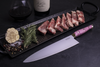


We rarely talk about cooking in emotional terms.
We describe outcomes, flavor, nutrition, technique - but we avoid the quieter truth: cooking is one of the most direct ways we care for one another.
Long before it was content or culture, food was reassurance. It said you are safe here. It said you matter enough for time and attention. It said I thought of you before you arrived.
That language has not changed.
Care Has a Physical Form
Care is not abstract. It is embodied.
It lives in small, unremarkable gestures: washing vegetables thoroughly, cutting evenly, tasting twice, wiping a counter before serving. These acts take time. They are unnecessary if efficiency is the goal, and essential if care is.
When we cook for someone, we borrow time from ourselves and give it away. The meal carries that choice with it. Food is not just nourishment; it is presence made visible.
Why the Act Matters as Much as the Result
A technically perfect dish can still feel hollow.
We have all met meals that were impressive but impersonal, precise, beautiful, and oddly distant. Something essential was missing. Usually it was not skill. It was attention.
The act of cooking shapes the outcome in ways that cannot be corrected at the plate. A rushed hand cuts differently than a steady one. A distracted cook tastes less accurately. The body knows when it is being hurried.
Cooking well is not only about knowing what to do. It is about being present while doing it.
Tools Shape Behavior
We like to believe tools are neutral, that a good cook can adapt to anything. To a point, that is true. But over time, tools train us.
A dull knife encourages force. Force invites haste. Haste narrows attention. Soon, cooking becomes something to get through rather than step into.
A well-made tool does the opposite. It invites calm. It rewards patience. It lets the cook move deliberately, without bracing against resistance. The shift is subtle, but cumulative. Over years, it changes how cooking feels.
Familiarity Creates Ease
The best tools are not the most impressive ones. They are the ones you reach for without thinking.
Familiarity builds a quiet trust. Your hand knows the weight. Your fingers anticipate the balance. Movements become economical, almost unconscious.
In that ease, attention is freed rather than lost. It moves outward -toward the food, the timing, the people waiting. A tool that feels foreign keeps asking for attention. A tool that fits returns it.
Why Care Requires Longevity
Care is not episodic. It is repeated over time, often without ceremony.
A knife used once for a special meal is not yet meaningful. A knife used daily, sharpened carefully, cleaned by hand, and returned to its place begins to carry memory.
Each meal leaves a trace. Small marks accumulate. Edges thin. Handles soften. These changes are not deterioration; they are evidence of relationship. Objects meant to be replaced interrupt this process. Objects meant to last allow it to deepen.
The Gift of a Tool Is a Statement
To give someone a tool for their kitchen is an intimate gesture. It suggests belief -not only in their skill, but in their desire to care for others. It says I see how you show love.
This is why such gifts should be chosen carefully. A tool that prioritizes novelty or display can feel hollow. A tool chosen for longevity, balance, and restraint communicates respect. It trusts the recipient to understand its value over time.
What We Overlook
Modern culture encourages speed, efficiency, and optimization. Even care is often compressed - measured in shortcuts and substitutions.
But care resists compression. It expands to fill the time you give it. It rewards attention slowly. It reveals itself not in highlights, but in consistency.
Tools that support care must share this orientation. They cannot rush the hand. They cannot demand replacement. They must be willing to stay.
A Different Measure of Good Cooking
Good cooking is usually described in terms of outcome. But another measure exists. Did the act of cooking feel grounded? Did it invite focus rather than friction? Did it leave the cook more present, not depleted?
Tools play a quiet but decisive role in those answers.
A Closing Thought
Food is a love language spoken with the hands. The tools we choose determine whether that language is rushed or fluent, strained or natural.
We may not speak about this often. We may not even notice it at first. But over time it becomes clear: how we cook shapes how we care, and the objects we keep close quietly teach us how to do both.