
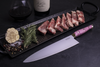


Most knives are designed to be replaced.
They are optimized for the moment of purchase—polished, impressive, sharp enough to convince. In time they dull, loosen, or simply lose relevance, until replacing them feels easier than caring for them.
An heirloom knife is designed for a different arc entirely. It is not made to impress quickly. It is made to stay.
Time Is the First Design Constraint
An heirloom is not defined by price, rarity, or branding. It is defined by how it behaves over time.
Time is unforgiving. It exposes shortcuts and magnifies small decisions. Materials either deepen or degrade. Geometry either holds or fails. Balance either remains trustworthy, or begins to feel wrong.
Designing for time means asking questions most products avoid. What happens after ten thousand cuts? How does this object feel once the novelty is gone? Will it still be a pleasure to use when it carries marks rather than shine?
An heirloom knife must answer those questions before it ever reaches a kitchen.
Performance Is Only the Beginning
Sharpness is table stakes.
Many knives perform well when new. Far fewer perform well after years of sharpening, thousands of meals, and countless moments of use that were never planned or photographed.
An heirloom knife maintains its relationship with the hand. Its geometry supports control rather than fatigue. Its balance stays intuitive even as the steel thins with care. It does not fight the user; it disappears into motion.
Performance, in this sense, is not about extremes. It is about trust.
Materials Must Earn the Years
Not all materials age with dignity. Some crack. Some loosen. Some look better untouched than used—optimized for display, not for life.
An heirloom knife uses materials chosen for honesty: steel that responds predictably to sharpening, handles that warm to the hand rather than resist it, natural materials that gain character rather than conceal wear.
Patina is not a flaw. It is evidence. It records meals cooked, people gathered, seasons passed. An heirloom knife does not hide this history. It allows it to surface.
Restraint Is the Hidden Ingredient
The loudest objects rarely last.
Excessive branding, ornamental features, and trend-driven details age poorly because they announce a moment rather than transcend it.
Restraint allows an object to remain relevant as tastes change. A knife that relies on proportion, balance, and material integrity will always feel appropriate, even decades later. It does not demand attention. It earns familiarity.
Craft Is Respect Made Visible
True craft is not about perfection. It is about judgment.
The human hand makes small decisions a machine cannot: where to soften an edge, how to tune balance, when symmetry becomes lifeless. These subtleties are invisible in a showroom. They reveal themselves only in use.
An heirloom knife carries these decisions quietly. It feels considered because it is.
Care Is Part of the Relationship
Heirlooms are not passive objects. They invite participation.
A knife meant to last assumes it will be sharpened, cleaned, respected, and occasionally repaired. It is designed to be maintained, not discarded.
That care creates attachment. The act of maintaining a knife reinforces its value. Ownership becomes stewardship. Use becomes ritual.
Why Most Knives Will Never Be Heirlooms
Not because they are poorly made, but because they are designed for turnover.
When cost targets dictate materials, when volume dictates process, when trends dictate form, longevity becomes an afterthought.
An heirloom knife cannot be rushed. It requires saying no—to excess, to shortcuts, to scale that compromises judgment.
The Quiet Test
The simplest way to recognize an heirloom knife is to ask: Would you trust it to represent you when you are not there? Would you feel comfortable handing it to someone you respect? Would it still make sense in a kitchen that looks nothing like your own?
If the answer is yes, it may be worthy of staying.
A Closing Thought
An heirloom knife is not an object you buy for yourself alone. It is something you live with—until, one day, someone else does.
The question is not whether it will last. The question is whether it will be worth keeping.